

Vietnam Newsletter Outline: A local's guide to staying, eating, and exploring Vietnam's capital
- Travel blogs
- September 03, 2026
Discover Hanoi like a local with recommendations on where to stay, what to eat, cultural experiences, and the best places to explore in Northern Vietnam.
Hello from Hanoi Vietnam!
Hanoi is the capital of Vietnam and its second largest city with eight to nine million people. It is a vibrant city that is growing along with Vietnam. Located in the north, it retains traditions and a slower-paced life than Ho Chi Minh City. A stroll through and a beer in the old quarter reenforces this. It also has seasons although they are not as extreme as many places. In addition to being an ideal destination, it is also a launching pad to other renown Northern destination such as Ha Long Bay, Sapa and Ninh Binh. Food is more traditional and, like almost all of Vietnam, excellent.
Arrival
Vietnam has over ten international airports but three major ones in this order: Ho Chi Minh City, Hanoi and Danang. Internal air connections are generally good. Hanoi Airport is a bit older and not a new mega airport, but it is good enough. If flying from the United States, a stop is required. There are no direct flights to Hanoi and a San Francisco to Ho Chi Minh city is the only direct flight from the United States to Vietnam. Most of Southeast Asia requires a stopover. All the major Asian hubs – Tokyo, Taipei, Seoul, Singapore, Hong Kong and others have direct flights to Hanoi. There are even a couple from Heathrow and Paris in Europe. Vietnam Airlines is the flagship carrier and is a good airline, affiliated with Skyteam.
The biggest issue with Hanoi airport can be immigration. The lines can be long. However, we have a fast-track service that can streamline the immigration process. We also offer transportation from the airport to your lodging. The airport is the first thing a person sees in a country and arrival is often their first experience. We aim to make both as seamless as possible.
Lodging
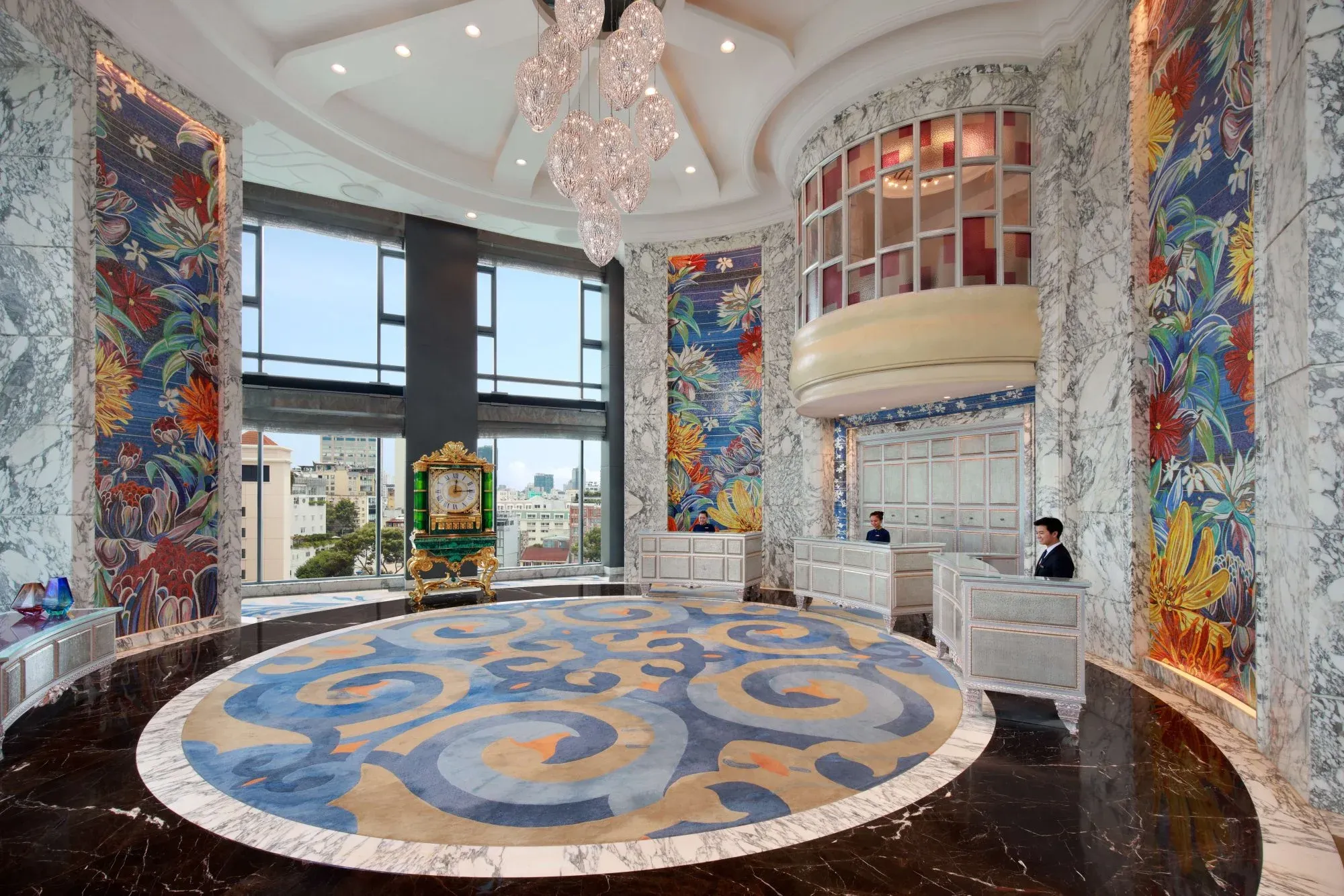
Hanoi has many lodging options. The Capella Hanoi and Sofitel Legend Metropole Hanoi lead the ultra-luxury category but there are many fine hotels in a variety of budgets. Lotte is a newcomer and offers something a little different to the above two hotels and JW Marriott is always solid. AirBnb is also a viable option. Some of Hanoi’s nicest hotels are listed below. I am also featuring one of my favorites: The Apricot Hotel.
Located directly across from Hoan Kiem Lake, one of the most iconic landmarks and the true heart of Hanoi, Apricot offers an excellent location for travelers who want to experience the city on foot.
From the hotel, guests can easily walk around the lake in the early morning, join the locals for their daily exercise, explore the Old Quarter, or simply step outside for coffee, local food, and people-watching.
More than just a hotel — an art collection
What makes Apricot uniquely interesting is its artistic character.
The hotel feels almost like a private art gallery, with an impressive collection of Vietnamese art throughout the property. Even the room categories have artistic names such as Sketch, Canvas, and Gallery.
The hotel also has an interesting connection with Hanoi's past. The building was formerly known as Phu Gia “Wealthy family”, and its history is closely connected with the more affluent residents of old Hanoi. Today, some Vietnamese who live overseas still choose to stay here when they return to Hanoi, as the hotel brings back memories of the city they once knew.
For travelers who appreciate art, and a sense of place, this gives Apricot a character that is quite different from a typical international five-star hotel.
A great location at a more approachable price
In terms of location, Apricot is in the same prime area as the iconic Sofitel Legend Metropole Hanoi. However, it offers a five-star experience at a more approachable price point, making it an interesting option for clients who want to stay in central Hanoi without necessarily choosing one of the city's most expensive luxury hotels.
One of my favorite features is the rooftop swimming pool.
On special occasions when Hanoi has fireworks, the rooftop becomes a wonderful place to watch them. From up there, the fireworks feel almost close enough to touch — a memorable moment for a first visit to Hanoi.
One important consideration
Of course, Apricot is not the right choice for every client.
The rooms are relatively compact, with the smallest rooms starting at around 25 square meters, and not every room offers a lake or city view.
For this reason, I would recommend Apricot particularly for clients who value location, art, and atmosphere more than having a large room or a spectacular view.
If your clients are looking for a comfortable five-star hotel in the very center of Hanoi, but do not require an ultra-luxury experience, Apricot can be a very good option.
Food
You’ve arrived in Hanoi and have a great place to stay. It is time to eat. Hanoi is a special food destination. If Michelin stars are your preference, there are two or three options. Local and regional food is what really elevates Hanoi and all of Vietnam. Pho is the most well-known food but there are many others. Bun Cha (grilled pork with noodles), Cha Ca (turmeric fish), Banh Mi (baguette sandwiches), and Banh Cuon (stuffed rice paper rolls) are just a few to whet your appetite. Many like a Hanoi beer to help their digestion. Pho is the iconic dish, and there is no better place to eat it than a local restaurant. Here is one of my favorites:
Experiences
And while we are talking about Hanoi, here are a few experiences I particularly enjoy arranging for my guests.
- Hanoi Street Food Tour
Walk through the Old Quarter, experience the lively rhythm of Hanoi, and taste some of the city's signature dishes — pho, bun cha, cha ca, nem ran — and, of course, the famous Vietnamese egg coffee.
Have you tried it before?
- Museums & Cultural Experiences
For clients interested in history and culture, Hanoi has many fascinating museums and historical sites that help explain Vietnam's complex and beautiful story.
- Cooking with a Local Family
Rather than simply eating Vietnamese food, guests can spend time with a local family and learn how traditional dishes are prepared. It is a wonderful way to experience everyday Vietnamese life.
- Duong Lam Ancient Village & Traditional Incense Village
For travelers who want to see a quieter side of northern Vietnam, a visit to an ancient village such as Duong Lam, combined with a traditional incense-making village, offers wonderful opportunities to experience local culture and photography.
- Exploring Beyond Hanoi
For clients with more time, Hanoi can also be the starting point for exploring northern Vietnam — from the landscapes of Ninh Binh, Ha Long Bay, and Sapa to scenic mountain roads and remote villages where travelers can discover the cultures of Vietnam's ethnic communities.
A Northern Vietnam journey can be as short as 2 days or as long as 20 days, depending on the client's interests and pace.